
Food is one of the most basic human needs. As a substance that provides energy, supplies nutrients for growth and development, and supports the body’s ability to function, food is undeniably important to humans. Beyond satisfying hunger, access to food can influence a person’s dignity, security, physical well-being, and ability to make decisions about their life.
Beyond the immediate discomfort of hunger, food insecurity can affect several aspects of a survivor’s life, deepening existing vulnerabilities and making recovery more difficult. When every meal requires deep calculation, cost assessment, forgoing other needs, or even begging, human dignity is placed at stake. As we mark World Food Day, it’s important to consider not only how food is produced and distributed, but also how people can access it.
The Realities of Food Insecurity
While some can easily afford three square meals and even have snacks in between, others struggle to make ends meet. For someone living in an abusive situation, food is much more than an edible substance. It’s often a determining factor in various situations such as whether a victim leaves an unsafe environment, whether they can meet their children’s needs, and whether they have the strength and resources to face life head-on.
This contrast reflects more than differences in personal circumstances. Economic conditions, household income, employment opportunities, food prices, and living conditions all influence people’s ability to access adequate food. When income is insufficient, food may become a luxury to be negotiated rather than a necessity. People living in poverty, those without stable accommodation, victims of violence, and individuals who depend financially on others may face additional barriers to obtaining regular, nutritious meals.
In dire situations, exploitative people can take advantage of the lack of food to control or punish vulnerable individuals. What should be a basic human need then becomes a bargaining power. This shows that food insecurity can compromise a person’s sense of safety, undermine their dignity, weaken their physical well-being, and subject them to detrimental realities.
Addressing food insecurity therefore calls for practical and sustainable approaches that make adequate food accessible. Hence, society needs innovations that promote nourishment.
The Link Between Food, Safety, Nourishment, and Health
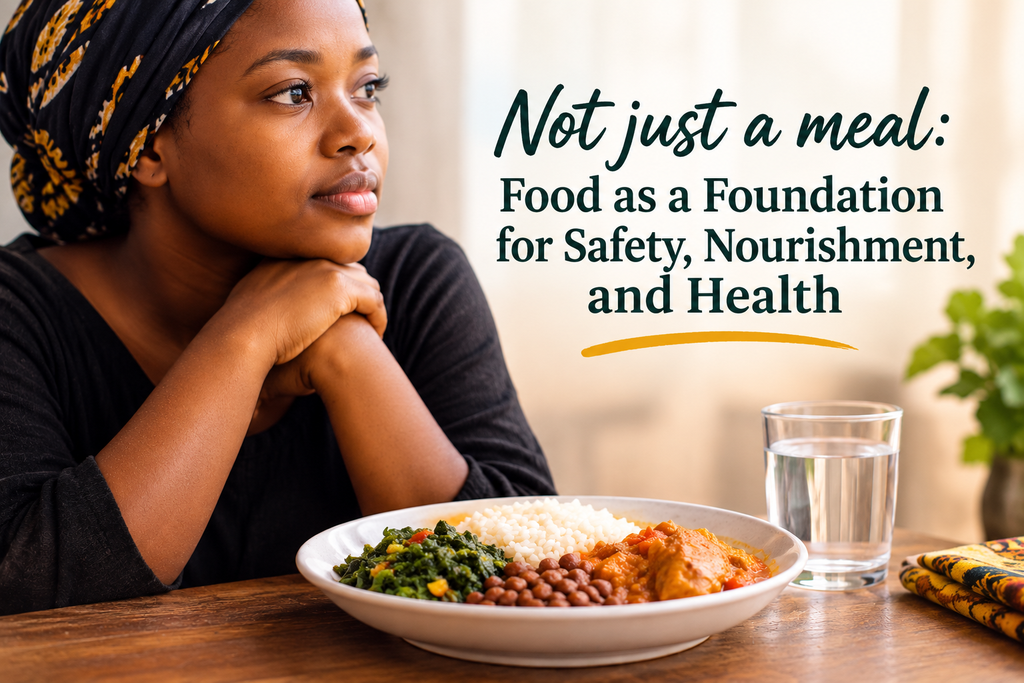
For vulnerable individuals such as women and child survivors of sexual and gender-based violence (SGBV), the availability of food can influence their immediate circumstances and their longer-term recovery. While navigating abuse, displacement, or financial dependence, the struggle to feed can compound existing challenges.
Understanding this connection requires looking beyond the question of whether someone has eaten. It means considering whether they can access food without being exploited, whether what they eat meets their nutritional needs, and whether their health is being supported or compromised by their circumstances. Food is connected to safety, nourishment, and health in ways that make it an essential consideration in survivor-centred care.
Food and Safety
Food deprivation can be a form of economic abuse. Research involving young Nigerian women with recent experiences of intimate partner violence has documented how financial dependence, control over household spending, and food deprivation can intersect with abuse. An abusive partner may withhold money for household provisions, deliberately provide insufficient money for food, or make access to meals dependent on compliance with their demands.
For someone who has no independent income and no reliable support system, leaving an abusive environment can feel like exchanging one form of insecurity for another. They may recognise the danger they face but remain because they know they can access food where they are, even if that access comes at a cost.
Food insecurity can also expose people to sexual exploitation. When individuals cannot afford meals or other basic necessities, exploitative people may take advantage of their circumstances by demanding sexual activity in exchange for food or money. Children and other dependents can also be affected when an abusive person controls household resources. Withholding food from them, using their hunger to punish a caregiver, or threatening to withdraw their basic needs can deepen the insecurity experienced by an entire household.
These realities demonstrate why safety must mean more than the absence of immediate physical violence. It must also include access to essential needs without fear or coercion. Food alone cannot guarantee safety, but reliable access to it enables survivors to pursue safer alternatives.
Food and Nourishment
Food supplies the nutrients the body needs to grow, repair damaged tissues, and sustain energy. Each class of food unpacks several benefits, making their consumption vital. A balanced and varied diet helps children develop and enables adults to maintain their physical well-being.
For children, a balanced and varied diet aids progressive growth. Contrarily, insufficient food or prolonged nutrient deficiencies stunt physical growth, cognitive development, and learning. For adults, nourishment remains essential throughout life. People need sufficient energy and nutrients to carry out daily activities, maintain muscle strength, and support immune function. Eating too little, or consistently consuming food that lacks essential nutrients, can leave the body feeling weak and drained.
Adequate nourishment is also important for victims of violence recovering from bodily injuries. Consistent access to healthy meals can complement appropriate medical care. Post-recovery, nourishment is also essential to survival. With sufficient, regular, balanced meals, child and female survivors of sexual and gender-based violence, and other individuals have better chances of recovery after disruptions.
Food and Health
Undernutrition can lead to weight loss, weakness, reduced physical capacity, and increased vulnerability to illness. Deficiencies in particular vitamins and minerals can also cause or contribute to specific health problems. For example, iron deficiency can cause anemia, while inadequate vitamin A can affect vision and immune function.
Children are particularly vulnerable to the effects of malnutrition as they may lack certain antibodies that inhibit their ability to fight against diseases and infections. Over time, poor dietary quality can contribute to health risks, including diet-related noncommunicable diseases.
Food insecurity can also compound existing health challenges. Someone managing a chronic illness, recovering from surgery, or receiving treatment for an injury may struggle to meet their nutritional needs when they cannot afford sufficient food. Inadequate nutrition may interfere with recovery, worsen weakness, or make it more difficult to maintain overall health.
There is also an important relationship between food insecurity and emotional well-being. Not knowing where the next meal will come from can create persistent worry and distress. This is why food support should be understood as one component of a broader approach to health and well-being.
Beyond Hunger: Why Food Support Matters
The consequences of food insecurity extend beyond the individual who goes without a meal. When people cannot reliably meet their basic needs, the pressures they experience can affect their families, relationships, and communities. Desperation may push some people towards harmful or risky survival strategies like theft, while others may become more vulnerable to exploitation by people who recognise their need and use it for personal gain.
Addressing food insecurity can help reduce one of the vulnerabilities that exploitative individuals may seek to take advantage of. Ensuring that people can meet their basic needs without being coerced or humiliated is an important part of building safer and more supportive communities.
At the Dorothy Njemanze Foundation (DNF), the relationship between food, safety, and well-being is not an abstract concern. We support survivors of sexual and gender-based violence, including women and children who may arrive at our shelter after experiencing abuse, displacement, financial hardship, or other difficult circumstances. For some of the people under our care, access to food is part of the wider reality of their cases and the practical challenges they face as they work towards stability.
Our responsibility is not limited to providing a place where survivors can stay. We must also consider the everyday needs that allow them to live with dignity while receiving support. Food is one of those needs, and providing it consistently requires resources, planning, and sustained support.
At our shelter, we provide three square meals daily for approximately 35 residents. A breakfast plate costs about ₦1,500. At that rate, providing breakfast alone costs approximately ₦1,575,000 over 30 days. When lunch and dinner are added, our total monthly feeding expenses can reach approximately ₦4 million.
These figures reflect the recurring cost of meeting a basic need for the people in our care. Food must be provided every day, not only when donations are available or during special occasions. While other essential services remain important, consistent feeding is a daily responsibility that cannot be postponed.
As we mark World Food Day 2026 under the theme “Innovate today. Nourish tomorrow,” we are reminded of the importance of finding inclusive and sustainable ways to improve access to sufficient, safe, and nutritious food. Innovation is important, but its value must also be measured by whether it reaches people whose circumstances make access to food difficult.
So, we welcome support from individuals, organisations, businesses, and other partners who can help us sustain this responsibility. Contributions towards feeding, whether financial donations or material food supplies, can help ensure that residents continue to receive regular meals. Such support also helps us direct available resources towards the other essential services survivors need.
You can support through either of the following ways:
Financial contributions
Account name: Dorothy Njemanze Foundation
Bank: Zenith Bank
Account number: 1014857963
Material food donations
If you would like to donate food items to support residents in our shelter, please contact us via hr@dnf.org.ng to arrange a visit and coordinate your donation..
Food is not just a meal. It is nourishment for the body, a foundation for health, and an essential part of creating the conditions in which people can live safely and with dignity. This World Food Day, let us move beyond awareness to action and work together to ensure that those who need support are not left hungry.
References
- https://pmc.ncbi.nlm.nih.gov/articles/PMC12338048/
- https://www.who.int/en/news-room/fact-sheets/detail/malnutrition
- https://www.who.int/news-room/fact-sheets/detail/healthy-diet
- https://www.wfp.org/stories/food-security-vs-food-insecurity-definitions-meaning-and-real-world-examples
- https://pmc.ncbi.nlm.nih.gov/articles/PMC12338048/
- https://www.who.int/news-room/fact-sheets/detail/malnutrition